
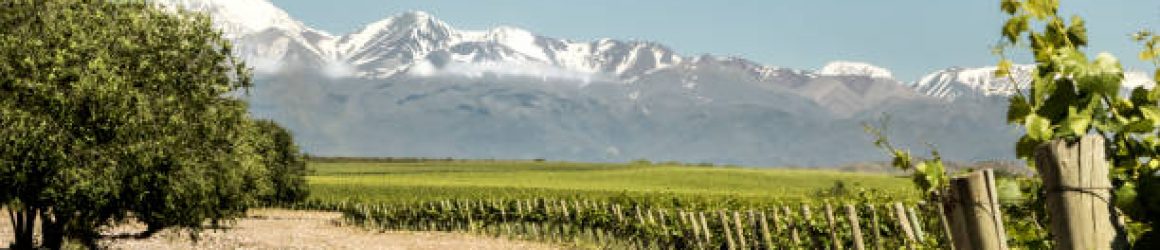
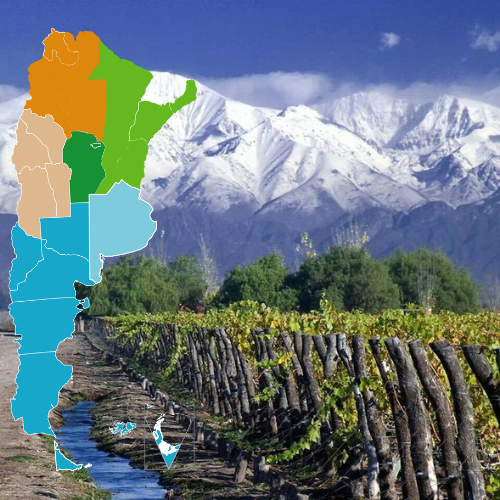
Argentina offers a stunning variety of wine regions, from the high-altitude valleys of the north to the sun-drenched plains of Cuyo. Each province has a unique terroir, history, and climate, producing expressive wines that reflect both the land and the people who cultivate it.
In the north, Jujuy, Salta, Tucumán, and Catamarca feature extreme altitudes, strong sunlight, and dramatic temperature swings, creating aromatic, fresh wines. In Cuyo—San Juan, Mendoza, and La Rioja—abundant sun, irrigation, and diverse soils support world-class reds and aromatic whites.
Jujuy – Extreme altitude viticulture
Jujuy represents one of the most extreme wine frontiers in the world, where viticulture stretches to altitudes rarely seen anywhere else. In the Quebrada de Humahuaca, vineyards can surpass 3,000 meters above sea level, while the lower, temperate valleys such as Yavi, Valle Grande, and Humahuaca offer more moderate conditions. This dramatic range of altitudes creates a wide variety of microclimates, from arid highlands with intense solar radiation to cooler, more humid pockets in the lower valleys.
The region experiences scarce rainfall, strong sunlight, and dramatic diurnal temperature variation, which helps preserve acidity and develop complex aromatics despite low yields. Soils are typically rocky, alluvial, and mineral-rich, contributing to the distinct character and freshness of the wines.
Jujuy’s winemaking history is linked to early Spanish settlers and indigenous traditions, though viticulture remains small-scale. The wines are expressive and unique, with vibrant acidity, intense color, and a pronounced sense of place. Torrontés, Malbec, and Criolla Grande are increasingly being cultivated, alongside experimental plantings of Syrah and Cabernet Sauvignon, reflecting the innovative spirit of the region.
Though still developing and limited in production, Jujuy embodies the pursuit of new boundaries in Argentine wine. The combination of extreme altitude, bold experimentation, and careful vineyard management is producing wines that stand out for their purity, intensity, and originality—making Jujuy a true frontier for adventurous winemakers and wine enthusiasts alike.
Salta and the Calchaquí Valley
Salta is the most internationally recognized wine province in northern Argentina, particularly celebrated for the Calchaquí Valleys, which include the subregions of Cafayate, Molinos, San Carlos, and Cachi. Vineyards are planted at extreme altitudes ranging from 1,500 up to over 3,000 meters above sea level, making this one of the highest wine-growing regions in the world.
The combination of high solar exposure, low humidity, and dramatic diurnal temperature variation allows grapes to develop thick skins, intense aromatics, and natural acidity, producing wines of remarkable structure and expression. Soils are diverse, including sandy alluvial terraces, clay-loam slopes, and rocky outcrops, each contributing unique minerality and freshness to the wines.
Salta’s winemaking tradition dates back to the 16th and 17th centuries, introduced by Spanish settlers and Franciscan missionaries who established vineyards for sacramental wine. Over centuries, local winemakers adapted European techniques to the challenging high-altitude environment, creating a legacy of precision, innovation, and respect for the land.
Torrontés reaches one of its finest expressions here, offering elegant balance between aromatic intensity—white flowers, citrus, and spices—and vibrant freshness. Red varieties, including Malbec, Cabernet Sauvignon, and Tannat, produce structured wines with deep color, concentration, and notable aging potential. Emerging varietals such as Syrah, Bonarda, and Cabernet Franc are also gaining attention for their adaptability and expressive quality.
Salta is not only a region of extreme viticulture but also a laboratory of innovation, where careful vineyard management, altitude-specific planting, and sustainable practices allow winemakers to produce wines that are both powerful and elegant. The province’s wines reflect the dramatic landscapes, centuries of tradition, and a commitment to pushing the boundaries of Argentine viticulture.
Tucumán – Tradition and rediscovery
Tucumán has a long-standing historical connection to viticulture, with vineyards dating back to the colonial period when Spanish settlers and missionaries introduced grape cultivation to the region. Although production has remained relatively small compared to neighboring provinces, Tucumán preserves a unique viticultural identity shaped by its diverse topography and microclimates.
Vineyards are primarily located in the high-altitude areas of the western valleys, such as Tafí del Valle and Amaicha, where elevations range from 1,200 to 2,000 meters above sea level. The combination of cooler nights, abundant sunlight, and well-drained soils helps preserve acidity and enhance the aromatic profile of the grapes, particularly for white varieties like Torrontés and Criolla, as well as reds such as Malbec, Cabernet Sauvignon, and Bonarda.
Soils in Tucumán are predominantly alluvial and sandy, often mixed with clay and stones, lending mineral complexity and freshness to the wines. The province’s climate, with warm days and cool nights, encourages a slow and balanced grape ripening process, contributing to wines with elegance and expressive character.
Today, Tucumán is experiencing a renewed focus on quality and innovation. Emerging wineries and boutique projects are exploring modern vineyard management, altitude-specific plantings, and sustainable viticulture practices. These initiatives aim to highlight the province’s unique terroir and produce wines that honor both its historical roots and its potential for contemporary expression.
Although still an emerging player in Argentine wine, Tucumán represents a bridge between tradition and modern development, offering distinctive wines that reflect the richness of its valleys, altitude, and climate.
Catamarca – Sun, altitude and identity
Catamarca is a high-altitude wine region in northwestern Argentina, with vineyards primarily located in the Tinogasta, Pomán, and Valle de Abaucán areas. Altitudes range from 1,200 up to 2,500 meters above sea level, making it one of the most elevated wine regions in the country. This extreme terroir, with abundant sunlight, cool nights, and low rainfall, creates ideal conditions for producing wines with concentrated flavors, firm structure, and vibrant acidity.
The province has a long viticultural history, dating back to colonial times, when Spanish settlers and missionaries planted the first vines for sacramental and local consumption. These early vineyards laid the groundwork for today’s small but innovative wineries, which continue to experiment with varietals and microclimates.
Soils in Catamarca are mainly alluvial, sandy, and rocky, offering excellent drainage and contributing mineral complexity to the wines. Torrontés, Malbec, Syrah, and Cabernet Sauvignon are the most prominent varieties, while emerging plantings of Bonarda and Cabernet Franc demonstrate the province’s experimentation with diverse grapes.
Catamarca is increasingly recognized for producing expressive, aromatic wines with distinctive character, reflecting the combination of extreme altitude, historical tradition, and modern viticultural practices. Although production remains limited, the province embodies the spirit of innovation and the pursuit of high-quality wines in Argentina’s northwestern frontier.
La Rioja – sun, soil, and tradition
La Rioja is a historic wine region in northwestern Argentina, known for its arid, high-altitude valleys and rich winemaking traditions. Vineyards are mostly located in the Famatina Valley, Aminga Valley, Villa Unión, and the Chañarmuyo Valley, benefiting from abundant sunlight, low humidity, and significant diurnal temperature variation, which helps develop aromatic complexity in the grapes.
The soils are generally alluvial and sandy, with excellent drainage, favoring varietals such as Torrontés Riojano, Malbec, Syrah, and Bonarda. While production is smaller compared to Mendoza or San Juan, La Rioja stands out for its aromatic whites, elegant reds, and innovative boutique wineries experimenting with high-altitude viticulture. The region also has a strong cultural heritage in winemaking, dating back to colonial times, which continues to influence modern practices.
Santiago del Estero – Exploration and new beginnings
Santiago del Estero is not yet a consolidated wine region, but it is part of Argentina’s expanding viticultural map.
With warm climatic conditions and experimental vineyards, it represents the exploration of new territories and the ongoing evolution of Argentine wine.Small-scale initiatives are beginning to test its potential, contributing to the diversity and future development of the industry.
Córdoba – The Heart of diversity
Córdoba’s wine regions are primarily concentrated in the Traslasierra and Calamuchita Valleys, with some vineyards also emerging in Punilla and Sierras Chicas. Vineyards thrive at altitudes ranging from 900 to 1,300 meters above sea level, where the combination of ample sunlight, cool nights, and a continental climate creates ideal conditions for grape growing.
The region’s winemaking tradition dates back to the 17th century, when Jesuit missionaries established vineyards to produce sacramental wine for their missions and local communities. These early plantings laid the foundation for viticulture in Córdoba, combining European techniques with local knowledge of the land and climate.
The region experiences hot, dry summers and significant diurnal temperature variations, which help preserve acidity and develop aromatic complexity in the grapes. Soils are predominantly alluvial and sandy, often mixed with clay and stones, providing good drainage and influencing the mineral character of the wines.
Córdoba’s vineyards today produce expressive and aromatic Torrontés, elegant Malbec, spicy Syrah, and structured Cabernet Sauvignon, alongside smaller plantings of Bonarda and Chardonnay. Innovative winemakers experiment with microclimates, altitude variations, and dry-farming techniques, reflecting a spirit of creativity that echoes the Jesuits’ legacy of experimentation and adaptation.Though still considered an emerging wine region, Córdoba is gaining recognition for fresh, aromatic wines that showcase both the character of the valleys and the historical depth of its viticultural tradition.
San Juan – Sun, soil, and strength
San Juan is one of Argentina’s most important wine regions, renowned for its vast vineyards, high-quality fruit, and innovative winemaking. Vineyards are concentrated in the Tulum, Zonda, Ullum, Pedernal, and Calingasta Valleys, spanning altitudes from 600 to over 1,500 meters above sea level. The combination of abundant sunlight, extreme diurnal temperature shifts, and a continental desert climate creates ideal conditions for producing intense, structured wines.
San Juan’s winemaking tradition dates back to the early 16th century, when Spanish settlers and missionaries—particularly the Franciscans—introduced vines to the region to produce sacramental wine. Over the centuries, irrigation techniques brought from ancient river valleys allowed vineyards to flourish in the arid environment, laying the foundation for one of Argentina’s most productive wine regions.
The region experiences very hot, dry summers and cool nights, which help maintain acidity and develop deep color and complex aromatics in the grapes. Soils are diverse, including alluvial terraces, sandy loams, and rocky slopes, providing excellent drainage and contributing to the wines’ distinctive mineral character.
San Juan is particularly known for robust reds such as Syrah, Malbec, Cabernet Sauvignon, and the regionally significant Bonarda, as well as for fresh, aromatic whites like Chardonnay and Torrontés. The Pedernal Valley, with its high-altitude vineyards and unique granite soils, has gained international recognition for producing wines with elegance and longevity.
Innovative producers in San Juan continue to experiment with altitude vineyards, dry-farming techniques, and careful canopy management, demonstrating a balance of tradition and modern viticulture. Today, San Juan stands out not only for its volume of production but also for its growing reputation for quality wines that reflect the region’s unique terroir, historical depth, and pioneering spirit.
Mendoza – Argentina’s wine capital
Mendoza is Argentina’s flagship wine region, offering everything from high-altitude vineyards to fertile plains.
Across Mendoza, Luján de Cuyo remains the historical home of Malbec, with stony alluvial soils at mid-altitudes producing wines of depth and longevity, while Maipú, at lower elevations with sandy loam soils, favors approachable, fruit-forward reds and whites.
The Valle de Uco, located in the southwest of Mendoza, is renowned for its high-altitude vineyards ranging from 900 to 1,500 meters above sea level. Within this valley, three main districts present unique characteristics: Tunuyán, Tupungato, and San Carlos. Tunuyán, with its sandy, well-drained soils and pronounced diurnal temperature variation, produces Malbec and Cabernet Franc of elegant structure and vibrant fruit. Tupungato, higher and closer to the Andes, has rocky soils and intense sun exposure, resulting in wines with remarkable aromatic complexity, freshness, and aging potential. San Carlos, with more clay and alluvial soils, produces full-bodied Malbec, Syrah, and Chardonnay that balance richness and finesse.
Moving south, San Rafael, particularly its eastern zone, presents a markedly different terroir. Here, vineyards are located on lower-lying plains with sandy-loam soils and a warmer, drier climate compared to the western foothills. These conditions favor vigorous growth and produce full-bodied reds like Syrah, Bonarda, and Cabernet Sauvignon, alongside rich, expressive whites. The combination of fertile soils and abundant sunlight gives these wines intensity and fruit-forward character, making the eastern zone a complement to the high-altitude elegance of Valle de Uco.
The interplay of Andes’ snowmelt, abundant sunlight, and diverse soils allows Mendoza to produce world-class Malbec, Cabernet Sauvignon, Bonarda, and Chardonnay.
San Luis – Emerging horizons
San Luis is an emerging wine region, where experimental vineyards explore high-altitude valleys and unique terroirs. The main viticultural areas include Beazley, Santa Rosa de Conlara and Merlo, each offering distinct microclimates and soil compositions that influence the character of the wines.Its continental climate, with warm days and cool nights, and sandy to alluvial soils create ideal conditions for producing fresh, aromatic white varietals such as Torrontés and Sauvignon Blanc, as well as elegant reds like Malbec and Cabernet Franc.
Although production is still limited, San Luis reflects the spirit of exploration, adding new dimensions to Argentina’s viticultural diversity and showing promise for future innovation.
Patagonia – Wild elegance
Patagonia spans Argentina’s southern provinces, combining established vineyards with experimental projects in its most remote areas. Its main wine regions are Río Negro, Neuquén, and parts of La Pampa, while Santa Cruz and Tierra del Fuego are largely experimental.
La Pampa hosts emerging vineyards exploring viticulture on flat plains with continental conditions. The region experiences hot summers and cold winters, with moderate rainfall that requires careful irrigation management. While still limited in production, it shows potential for aromatic whites such as Sauvignon Blanc and Chardonnay, as well as light, fresh reds like Pinot Noir and Malbec suited for early consumption. The sandy-loam soils and wide diurnal temperature variations contribute to expressive, balanced wines, making La Pampa an experimental frontier for Argentine viticulture.
Neuquén, in contrast, is more recent and experimental, with vineyards in Limay, Centenario, and San Patricio del Chañar at 200–1,100 meters. The soils are alluvial and rocky, with more pronounced diurnal shifts, producing wines with elegance, structure, and pronounced aromatic complexity, especially Pinot Noir, Malbec, and Cabernet Franc. Neuquén is gaining recognition for high-quality, cool-climate wines that complement the tradition of Río Negro.
Río Negro, particularly the Alto Valle, is considered the traditional heart of Patagonian viticulture. Vineyards here, at 250–400 meters above sea level, benefit from fertile terraces, sandy-loam soils, and a continental climate with hot days, cool nights, and low rainfall. These conditions favor a wide range of varieties, including Merlot, Malbec, Pinot Noir, and aromatic whites like Chardonnay and Sauvignon Blanc. Río Negro is characterized by consistent, fruit-forward wines that reflect a mature and well-established wine culture.
Finally, Santa Cruz and Tierra del Fuego represent the frontier of experimentation, testing cold-hardy varietals and innovative cultivation techniques under extreme southern conditions.
Patagonia’s wines are celebrated for their finesse, aromatic clarity, and expression of distinct southern terroirs. Across fertile valleys, rocky foothills, and windswept frontiers, the region blends tradition and innovation, highlighting Argentina’s potential in cool-climate viticulture.
Entre Ríos – emerging vineyards in fertile lands
Entre Ríos, located in northeastern Argentina along the Paraná and Uruguay rivers, is an emerging wine region characterized by fertile alluvial soils, humid conditions, and gentle rolling landscapes. The province’s continental-humid climate, with warm summers and cool nights, allows for balanced grape ripening and the development of aromatic freshness.
Vineyards are concentrated near towns such as Colón, Concordia, Victoria, and Gualeguaychú, where producers focus primarily on Torrontés, Chardonnay, Sauvignon Blanc, and lighter red varieties like Merlot and Bonarda. While production is smaller in scale compared to Mendoza or San Juan, Entre Ríos has carved out a niche for fresh, expressive wines with a subtle mineral character from its riverine soils.
This province reflects both tradition and experimentation, as growers adapt European varietals to local conditions and explore modern viticultural techniques to enhance quality. Entre Ríos represents the potential of northeastern Argentina, offering wines that are approachable, aromatic, and increasingly recognized within the country’s diverse wine map.
Buenos Aires – Vineyards in a growing horizon
Buenos Aires is a developing wine region in Argentina, with vineyards primarily located in the southern and western parts of the province, including areas around Luján, Chascomús, and Tandil. Although the climate is more humid and temperate compared to the arid valleys of Cuyo and the north, modern viticulture is gradually establishing itself thanks to careful site selection, irrigation, and innovative vineyard management.
The region features flat to gently rolling terrain, with fertile alluvial and sandy soils that support healthy vine growth. The temperate climate, combined with cool nights in certain inland areas, helps preserve acidity and freshness in both white and red varieties. Chardonnay, Sauvignon Blanc, and Pinot Noir are the most prominent whites and reds, while experimental plantings of Malbec, Merlot, and Cabernet Sauvignon are gaining attention.
Buenos Aires’ viticulture is still small-scale but dynamic, focusing on aromatic whites, light reds, and sparkling wines, highlighting freshness, balance, and elegance. This province demonstrates how Argentina’s wine culture extends beyond the traditional strongholds, embracing new terroirs and innovative approaches.
Argentina’s wines tell the story of its land, its people, and a tradition of passion and innovation.
Discover Argentina, one glass at a time.
Verónica Bruno
Sommelier · Tourism Specialist · Professional Cook
Argentina
