

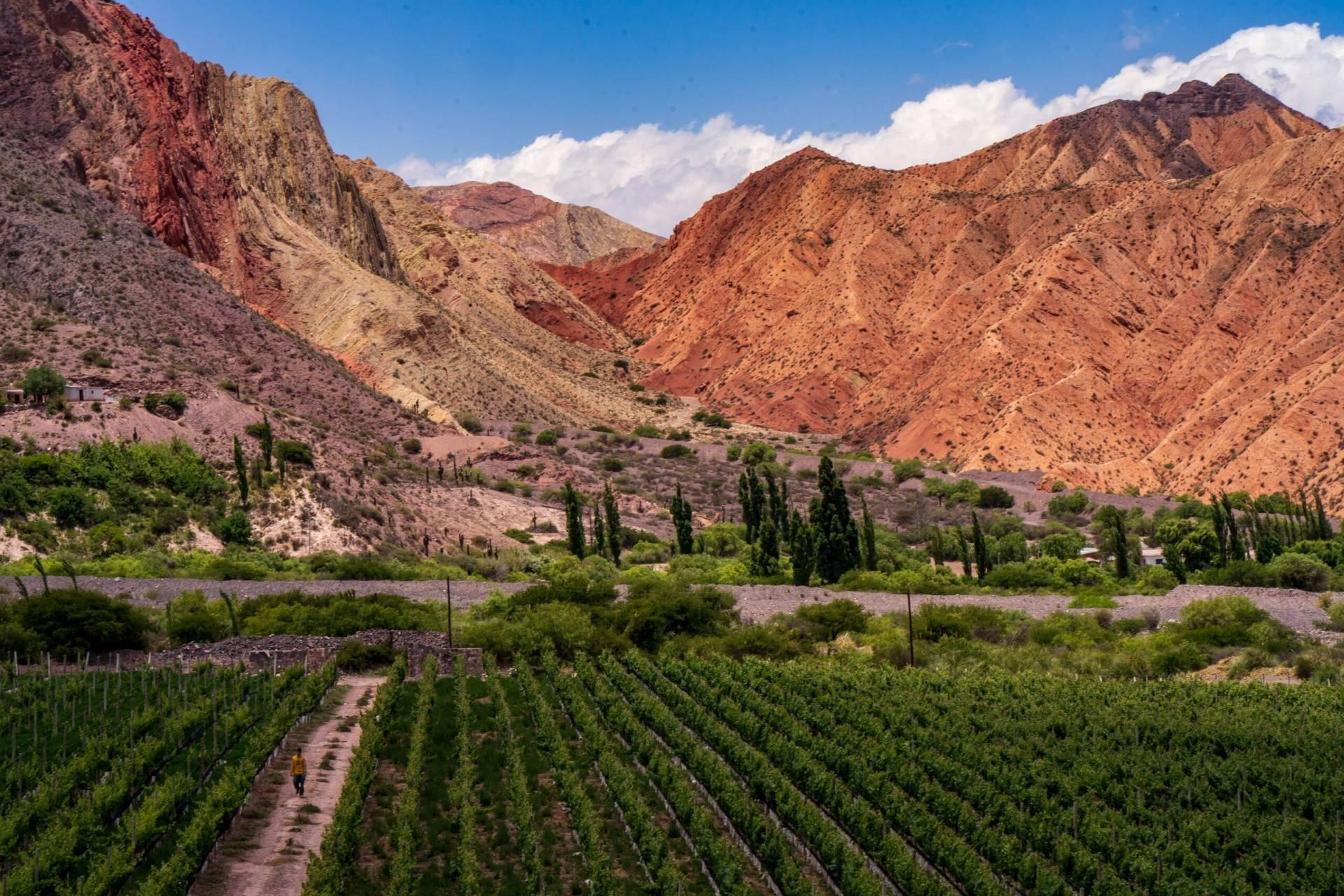
Foto: Huichaira Vineyards
Argentina is a land of contrasts, where wine is not only a product, but a profound expression of culture, history and identity.
From north to south, the country unfolds a remarkable diversity of landscapes and climates that shape wines with a strong sense of place.
In the north, provinces such as Jujuy, Salta, Tucumán, Catamarca and La Rioja reveal some of the most extreme and fascinating viticultural conditions in the world. High-altitude vineyards, intense sunlight and dramatic thermal amplitudes create wines of vibrant character, freshness and aromatic intensity.
Córdoba, meanwhile, reflects a re-emerging wine scene, where tradition and innovation come together, offering a different and evolving expression of Argentine viticulture.
From a historical perspective, Santiago del Estero holds a special place, as one of the earliest regions where the vine was introduced during colonial times, marking the beginning of Argentina’s deep-rooted relationship with viticulture.
At the foothills of the Andes, Mendoza stands as the heart of Argentine wine. Its diverse terroirs — from Luján de Cuyo to the Uco Valley — have positioned the country on the global stage, particularly through the elegance and depth of its Malbec, alongside other refined varieties.
To the east, San Juan contributes with its warm and generous style, while continuing to evolve towards more refined expressions.
In the south, Patagonia, including La Pampa, Río Negro, Neuquén and Chubut, introduces a different dimension: cooler climates, pure air and slow ripening cycles that result in wines of elegance, tension and remarkable balance.
Entre Ríos and Buenos Aires offer a contrast with more temperate climates, where the vineyards benefit from fertile soils and gentle temperatures, producing wines that are fresh, fruit-forward, and versatile — perfect for everyday enjoyment yet capable of expressing regional character.
These regions reflect a different rhythm of viticulture, with shorter growing cycles and a focus on approachable styles that complement both local cuisine and international palates.
Yet Argentine wine cannot be understood without its gastronomy.
The country’s culinary identity has been deeply shaped by waves of immigration — particularly from Italy and Spain, but also from France, Germany and the Middle East — leaving a lasting imprint not only on techniques and recipes, but on the very way food and wine are shared.
From iconic dishes such as asado, empanadas, milanesas and fresh handmade pastas, to deeply rooted traditions like locro and humita, Argentine cuisine reflects a rich cultural heritage shaped by both native and immigrant influences.
Other beloved specialties such as choripán, provoleta, regional stews and Patagonian lamb further express the diversity of the country’s culinary landscape, while artisanal breads, olive oils and local products play an essential role in everyday gastronomy.
This diversity continues to evolve through a vibrant contemporary scene, where chefs reinterpret traditional flavors with creativity while honoring their origin.
In Argentina, food is not just about nourishment — it is about gathering, sharing and celebrating. Around the table, wine becomes part of a ritual that brings people together and gives meaning to every experience.
Wine, in Argentina, is ultimately about connection — with the land, with history, with people, and with every moment worth celebrating.
As a Sommelier, Tourism Specialist and Professional Cook, I share this universe through curated experiences, education and storytelling, inviting others to discover Argentina in an authentic and meaningful way.
Discover Argentina, one glass at a time.
Verónica Bruno
Sommelier · Tourism Specialist · Professional Cook
Argentina
