
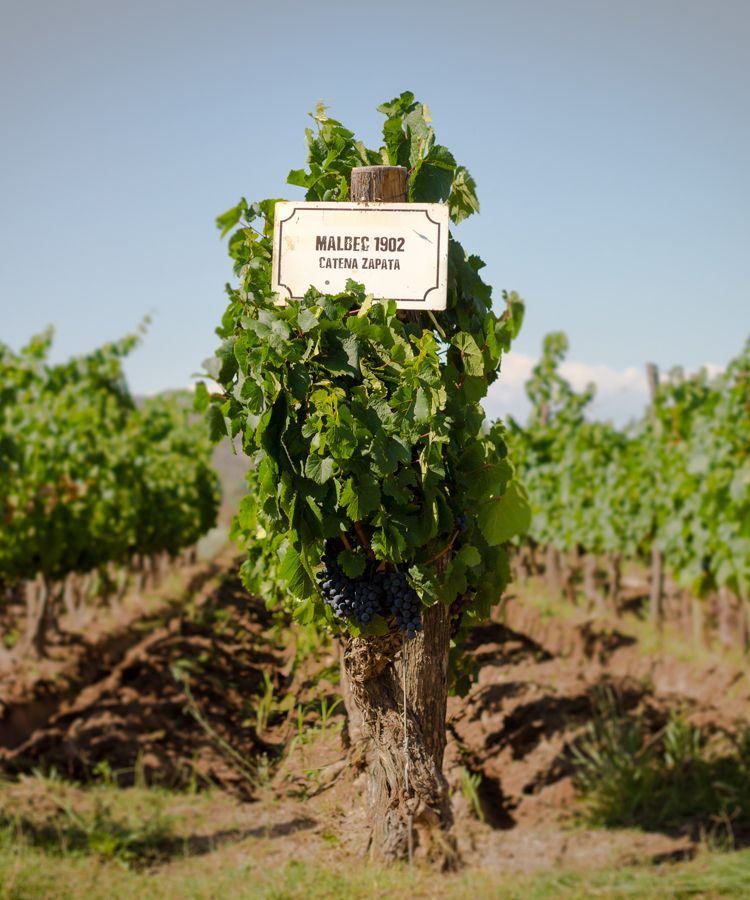
Every April 17th, the wine world celebrates Malbec, a varietal whose journey across continents shaped not only its identity, but also that of an entire country.
To understand Malbec is to understand a story of migration, adaptation, and reinvention.
Ancient roots in France
Long before becoming Argentina’s flagship grape, Malbec had deep roots in France. It is believed to have originated in the southwest, particularly in the historic region of Cahors, where it was known locally as “Côt” or “Auxerrois.”
In medieval times, wines from Cahors were highly valued and even exported to England, often competing with those from Bordeaux. Malbec played a key role in these blends, contributing color, structure, and intensity.
However, its path in France was not always easy. The grape was highly sensitive to frost and disease, which made it difficult to cultivate consistently. Over time, especially after the devastating Phylloxera epidemic in the 19th century, Malbec lost prominence in favor of more resilient varieties.
A turning point: Arrival in Argentina
The destiny of Malbec changed forever in 1853, when Argentina took a decisive step toward developing its wine industry.
That year, under the vision of then-president Domingo Faustino Sarmiento, the country sought to modernize agriculture. French agronomist Michel Aimé Pouget was invited to introduce European grape varieties, among them was Malbec.
What seemed like a simple agricultural initiative would become one of the most significant moments in Argentine wine history. This date is now commemorated globally as World Malbec Day.
Finding Its true home in the Andes
In Argentina, Malbec found something it had never fully achieved in Europe: stability and expression.
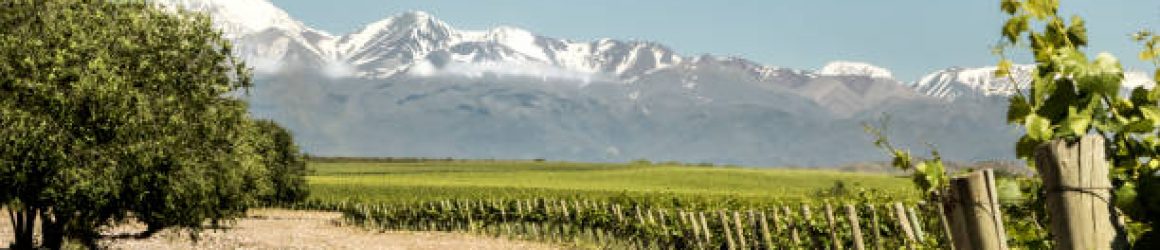
Particularly in Mendoza, at the foothills of the Andes, the grape adapted exceptionally well. The combination of high altitude, intense sunlight, low humidity, and significant day-night temperature variation created ideal conditions.
Unlike its French counterpart — often more rustic and tannic — Argentine Malbec developed a new profile:
softer tannins, ripe fruit, floral notes, and a remarkable balance between power and elegance.
Regions such as Luján de Cuyo and Valle de Uco became benchmarks, while newer terroirs across the country, including Patagonia, began to reveal even more dimensions of the grape.
For much of the 20th century, Malbec was widely planted in Argentina but mostly consumed domestically. It wasn’t until the 1990s, with a renewed focus on quality and exports, that Argentine Malbec began its rise on the global stage.
Winemakers started to refine their techniques, reduce yields, explore terroirs, and invest in modern technology. Malbec became the perfect ambassador: approachable yet complex, expressive yet versatile.
Today, it is Argentina’s most recognized varietal, present in markets around the world and deeply associated with the country’s identity.
A grape of many expressions
One of Malbec’s most fascinating qualities is its adaptability. It reflects terroir with clarity:
- At higher altitudes, it shows freshness, tension, and floral aromas
- In warmer zones, it becomes richer, with darker fruit and rounder textures
- In cooler regions like southern Argentina, it can reveal subtlety and elegance
From youthful, fruit-forward wines to structured, age-worthy bottles, Malbec continues to evolve.
More than history: A living story
Malbec is not just a grape with a past — it is a grape in constant transformation.
It tells the story of immigrants, of innovation, of a country that found in wine a way to express itself to the world. It reflects both tradition and modernity, science and emotion.
And perhaps most importantly, it connects people: around a table, in a vineyard, or through a shared glass.
Celebrating Malbec today
On this Malbec Day, we celebrate more than a varietal. We celebrate a journey from Cahors to the Andes, from uncertainty to global recognition.
In every glass of Malbec, there is history, place, and passion.
And that story is still being written.
Descubre más desde Vinos y Pasiones | Historias y sabores
Suscríbete y recibe las últimas entradas en tu correo electrónico.
