Every year, on the third Thursday of November, the arrival of Beaujolais Nouveau brings together wine lovers around the world. Behind this annual celebration lies a wine region with a distinctive identity.
Every year, on the third Thursday of November, wine lovers, sommeliers, producers and wine professionals turn their attention to Beaujolais, in southeastern France. It is the day when Beaujolais Nouveau is officially released, marking the arrival of the first wines of the new harvest.
In 2026, the celebration takes place on Thursday, November 19.
What began as a regional tradition has become an international event, celebrated in restaurants, wine bars and wine shops across different countries. The release of the new vintage is an occasion to gather, share a glass and celebrate the work of the people behind the wine.
Yet Beaujolais Nouveau is much more than a date on the wine calendar. It is also an invitation to discover a region, its landscapes, its grape varieties and the diversity of its wines.
Discovering Beaujolais
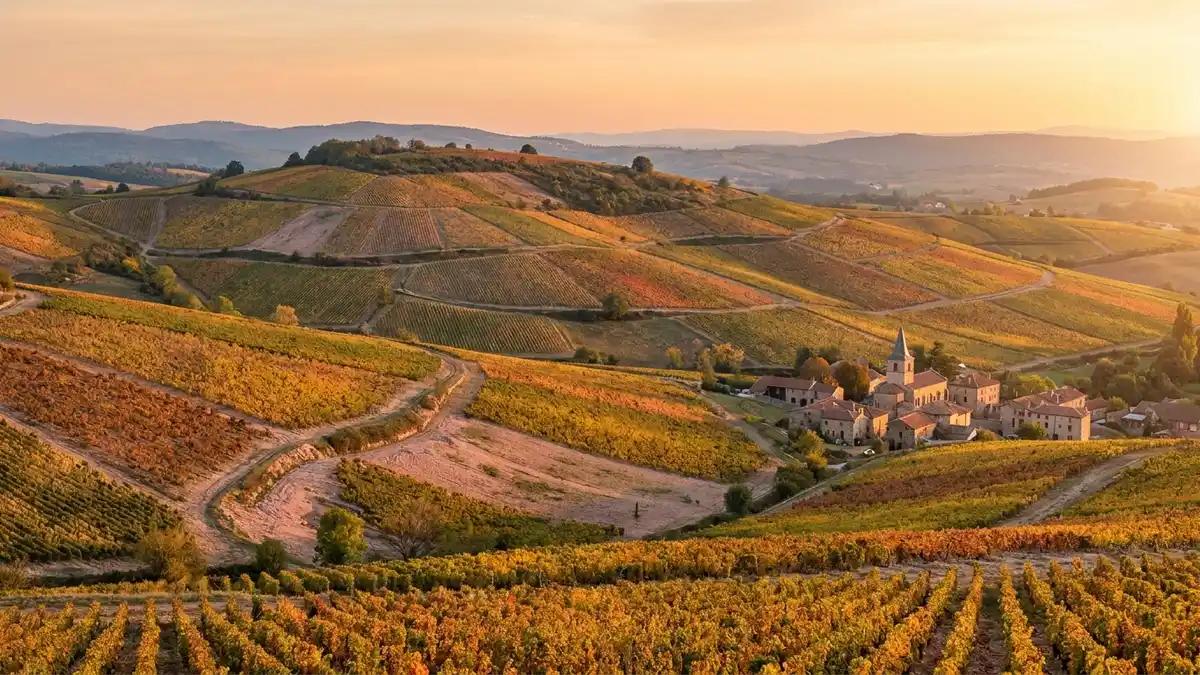
Beaujolais is located north of Lyon and south of Mâcon, extending across the southern part of the Burgundy wine area. Its vineyards stretch over rolling hills, valleys and slopes, creating a landscape closely connected to the region’s wine culture.
The region is particularly known for its diversity of soils and landscapes. In the southern part, clay and limestone are common, while the northern areas feature a greater presence of granite and sandy soils. These geological differences contribute to the distinctive character of the wines.
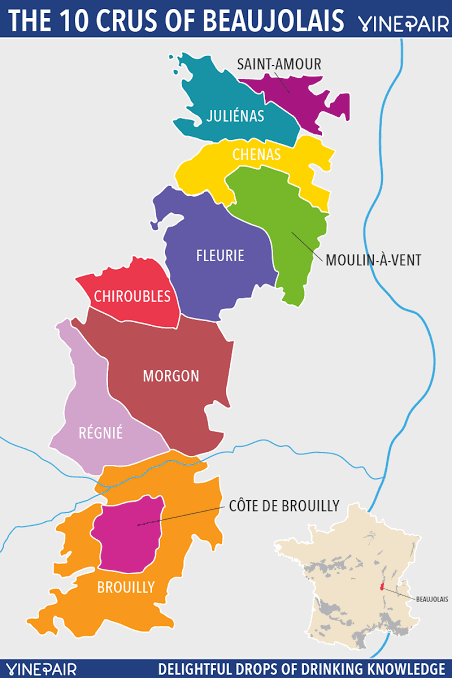
The Beaujolais vineyard is organized into twelve appellations: Beaujolais, Beaujolais-Villages and ten village appellations known as the Crus du Beaujolais.
The ten Crus are Saint-Amour, Juliénas, Chénas, Moulin-à-Vent, Fleurie, Chiroubles, Morgon, Régnié, Côte de Brouilly and Brouilly.
Each appellation expresses a different relationship between grape variety, soil, landscape and winemaking tradition.
Gamay: The celebrated grape
Gamay, more precisely Gamay Noir à Jus Blanc, is the emblematic red grape variety of Beaujolais. It plays a central role in the region’s identity and is the variety used to produce Beaujolais Nouveau.
It is known for producing wines with vibrant fruit expression, freshness and generally moderate tannins. Typical aromatic profiles may include red cherry, raspberry, strawberry and other fresh red fruit notes.
Although Beaujolais Nouveau is perhaps its most internationally recognized expression, Gamay can produce a wide range of wine styles, from light and approachable wines to more structured examples with ageing potential.
The ten Crus demonstrate this diversity particularly well, showing how different terroirs and winemaking approaches can shape the expression of the same grape variety.
What makes Beaujolais Nouveau different?
Beaujolais Nouveau is a vin primeur, a young wine released shortly after the harvest, rather than a wine intended for extended ageing.
It is produced exclusively within the Beaujolais and Beaujolais-Villages appellations, using Gamay for the red wines. Rosé versions are also permitted.
One of the traditional techniques associated with its production is carbonic or semi-carbonic maceration. These techniques involve the use of whole grape bunches and aim to preserve fresh fruit aromas and produce wines with soft tannins and an approachable texture.
The resulting wines are generally characterized by their freshness, lively fruit expression and immediate drinking appeal.
Their purpose is offer an early expression of the vintage and celebrate the new harvest.
A worldwide celebration
The history of Beaujolais Nouveau is closely linked to the tradition of releasing young wines shortly after the harvest.
In 1951, French regulations restricted the early commercialization of wines from the same year’s harvest. Following discussions and requests from Beaujolais producers, an exception was granted for wines identified as primeurs.
Initially, November 15 became the official release date. In 1985, the date was changed to the third Thursday of November, establishing the calendar tradition that continues today.
Over the decades, Beaujolais Nouveau gained international recognition. Its launch became a major event in wine-producing and wine-consuming countries, helping introduce the name Beaujolais to a much wider audience.
Exploring Beaujolais
While Beaujolais Nouveau attracts international attention every November, the region offers a much broader wine identity.
The ten Crus reveal the diversity and potential of Gamay, showing how differences in soils, altitude, exposure and winemaking approaches shape the character of each wine.
Some appellations are particularly known for their structure and ageing potential, such as Morgon and Moulin-à-Vent. Others, including Fleurie and Chiroubles, are often associated with elegance, freshness and aromatic expression.
Exploring these wines allows us to move beyond the image of Beaujolais as simply the region behind its famous November celebration and discover a territory with remarkable wine diversity.
A celebration of wine and culture
Beaujolais Nouveau reminds us that wine is not only about grape varieties, production techniques or tasting notes. It is also about people, traditions, territories and the collective experiences built around a glass.
Its annual release offers an opportunity to celebrate the harvest, recognize the work of winegrowers and rediscover a region whose identity extends far beyond its best-known wine.
This is perhaps the true value of Beaujolais Nouveau: a celebration that begins with a young wine and opens the door to a much richer understanding of French wine culture.
Food pairing
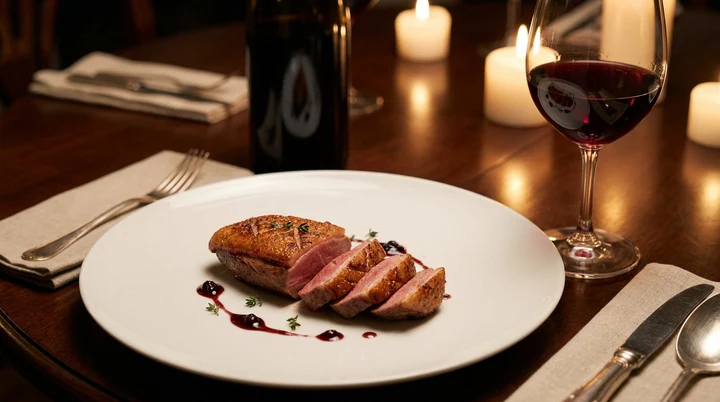
With its fresh fruit character, lively acidity, soft tannins and light to medium body, Beaujolais Nouveau is a versatile wine that goes well with with a wide range of dishes. Its freshness and fruity profile make it particularly suitable for foods that are flavorful without being excessively rich or heavy.
It pairs especially well with French charcuterie, including saucisson, cured ham, pâtés and terrines. These traditional combinations highlight the wine’s freshness while balancing the savory and sometimes slightly fatty character of the food.
Among main courses, roasted chicken, grilled pork, duck preparations and traditional sausages are excellent choices. The wine can also accompany meat-based pies, quiches, savory tarts and dishes featuring mushrooms or herbs.
Cheese offers another interesting opportunity for pairing. Soft cheeses such as Brie and Camembert, as well as semi-hard varieties like Comté and Saint-Nectaire, can complement its fruity expression. For a more regional experience, exploring French cheeses alongside a glass of Beaujolais is a wonderful way to discover the gastronomic identity of the area.
For vegetarian options, consider mushroom risotto, roasted vegetables, vegetable quiches, lentil preparations and dishes featuring herbs and mild spices. Their earthy and savory flavors can work particularly well with Gamay’s fresh fruit character.
Beaujolais Nouveau is best served slightly chilled, generally around 12–14°C, allowing its freshness and aromas to shine. Its approachable style makes it an excellent companion for informal meals, seasonal dishes and gatherings with friends.
Let’s raise a glass to Beaujolais, its people and its wines!
Descubre más desde Vinos y Pasiones | Historias y sabores
Suscríbete y recibe las últimas entradas en tu correo electrónico.
